
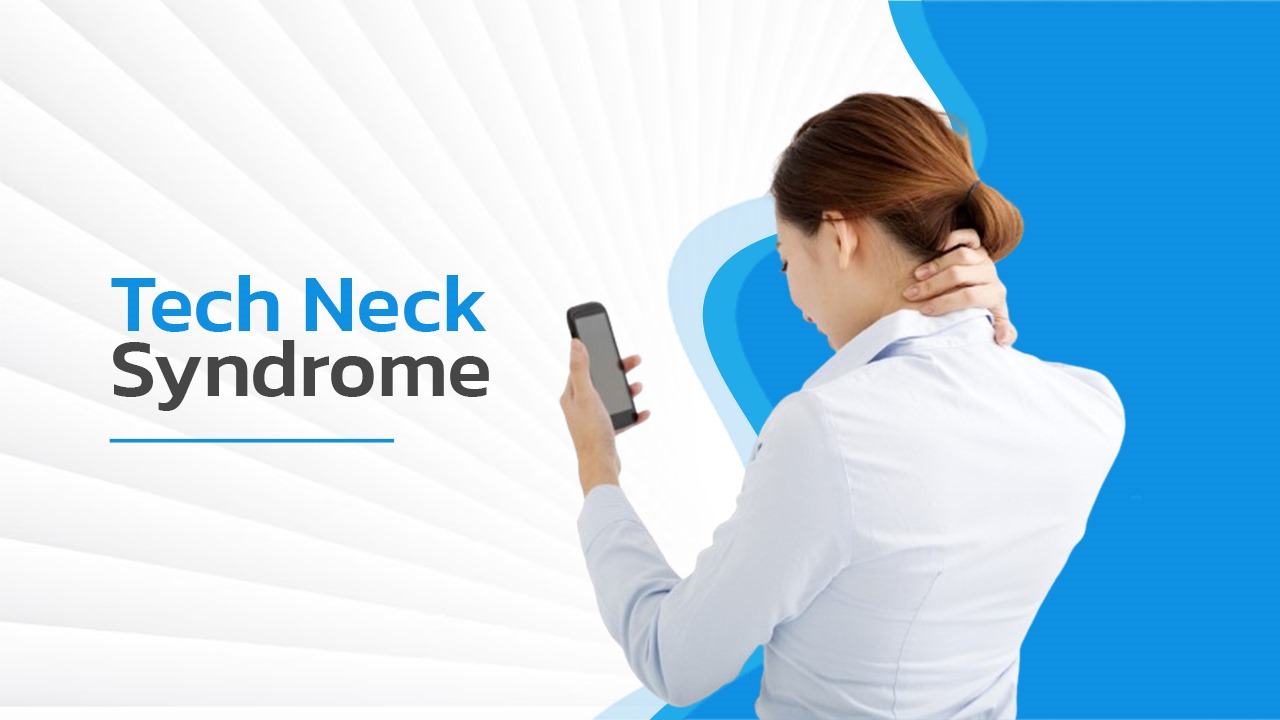
Tech-Neck Syndrome: Neck Pain in the Digital Age
In today’s digital world, most of us spend hours looking down at phones, laptops, and tablets. Whether it’s scrolling through social media, attending online meetings, or working long office hours, our necks are under constant strain. This modern-day problem is now commonly known as Tech-Neck Syndrome, and it is becoming increasingly common among teenagers, working professionals, and even children.
Tech-neck refers to neck pain and stiffness caused by poor posture while using digital devices. When you tilt your head forward for long periods, the pressure on your cervical spine increases significantly. In a neutral position, the head weighs around 4–5 kg, but bending it forward at a 45-degree angle can place nearly 20 kg of stress on the neck muscles and spine. Over time, this continuous strain can lead to chronic pain, muscle tightness, headaches, and even nerve compression.
The symptoms of tech-neck usually begin gradually. Many people experience neck stiffness, shoulder pain, headaches, reduced neck movement, or a burning sensation between the shoulder blades. Some may also notice tingling or numbness in the arms due to nerve irritation. Ignoring these symptoms can worsen the condition and affect daily life.
One of the biggest reasons behind tech-neck is poor posture. People often sit with rounded shoulders, slouched backs, and bent necks while using devices. Lack of physical activity and long screen hours further contribute to muscle weakness and spinal stress.
Fortunately, tech-neck can often be managed with lifestyle changes and early intervention. Maintaining proper posture is the first step. Keeping screens at eye level, sitting upright, and taking regular breaks can reduce neck strain. Stretching exercises and strengthening the neck and shoulder muscles also help improve posture and relieve discomfort.
However, if the pain becomes persistent or interferes with movement or daily activities, a medical evaluation is important. In some cases, prolonged strain can lead to disc issues, cervical spondylosis, or nerve compression. Early diagnosis helps prevent complications and ensures effective treatment.
Treatment depends on the severity of the condition. Mild cases usually improve with physiotherapy, posture correction, pain management, and ergonomic changes. Advanced cases may require imaging studies like MRI to evaluate spinal damage. Rarely, when there is severe nerve compression or disc prolapse, surgical intervention may be needed.
This is where expert care makes a difference. Dr Srikant Swain, the best neurosurgeon in Bhubaneswar, emphasizes the importance of early attention to neck pain caused by prolonged device use. With accurate diagnosis and personalised treatment, patients can recover effectively and prevent long-term spinal complications.
In the digital age, avoiding screens completely may not be possible, but protecting your spine certainly is. Listening to your body, maintaining proper posture, and seeking timely medical advice can help you stay pain-free and healthy. Your neck supports your head every single day, it deserves care and attention too.