How AI Is Changing the Future of Brain Surgery
The world of brain surgery is evolving rapidly, and one of the biggest game changers today is Artificial Intelligence (AI). What once sounded like science fiction is now becoming a reality inside operating theatres, helping neurosurgeons perform with greater precision, safety, and confidence.
Traditionally, brain surgery has always been one of the most complex medical procedures. The human brain is delicate, and even the smallest error can have serious consequences. This is where AI is making a remarkable difference. By analysing massive amounts of medical data in seconds, AI helps doctors plan surgeries more accurately than ever before.
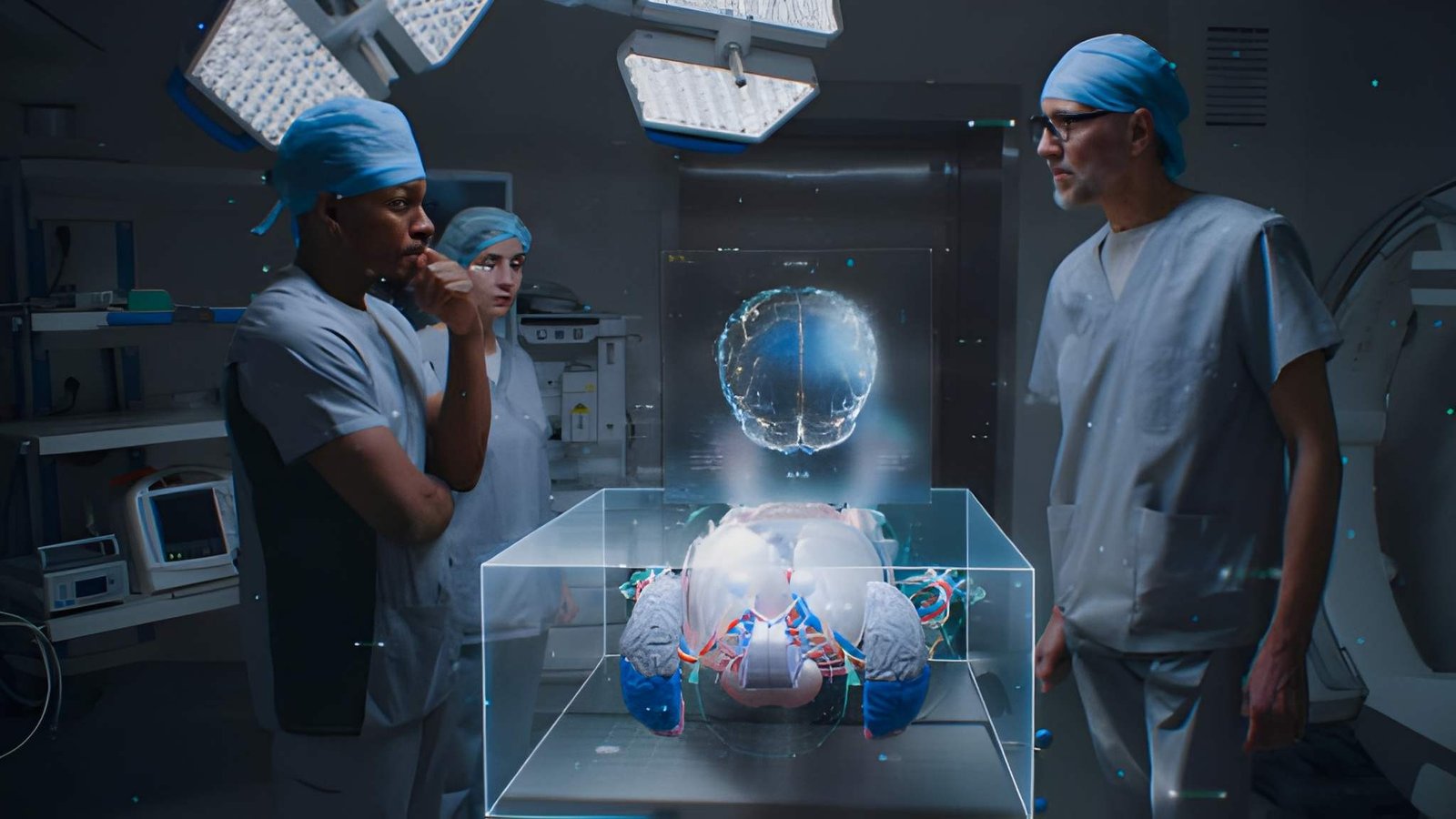
For example, AI-powered imaging tools can now detect even the smallest abnormalities in the brain, things that might be difficult to spot with the human eye alone. This means conditions like tumours, aneurysms, or neurological disorders can be identified earlier and treated more effectively.
Another major advancement is in surgical navigation. AI-assisted systems create highly detailed 3D maps of the patient’s brain. These maps guide neurosurgeons during the procedure, almost like a GPS, helping them reach the exact area that needs treatment while avoiding critical regions responsible for speech, movement, or memory.
Robotics, combined with AI, is also transforming brain surgery. Robotic arms can assist in performing extremely delicate movements with unmatched precision. While the neurosurgeon remains fully in control, AI enhances their ability to operate with minimal invasiveness. This often results in smaller incisions, less pain, and faster recovery for patients.
AI is not just limited to the operation theatre. It also plays a crucial role in post-surgery care. By monitoring patient data, AI systems can predict potential complications early, allowing doctors to take timely action. This improves overall outcomes and gives patients a better chance at a smooth recovery.
However, it’s important to understand that AI is a tool, not a replacement for human expertise. The experience, judgment, and skill of a neurosurgeon remain irreplaceable. AI simply enhances these abilities, making surgeries safer and more efficient.
Experts like Dr Srikant Swain, often regarded as the best neurosurgeon in Bhubaneswar, emphasize that technology and human expertise must go hand in hand. The goal is always to provide patients with the highest level of care using the best tools available.
As we move forward, the integration of AI in neurosurgery will only grow stronger. For patients, this means better diagnosis, safer surgeries, and improved recovery experiences. The future of brain surgery is not just advanced, it’s smarter, more precise, and more patient-focused than ever before.